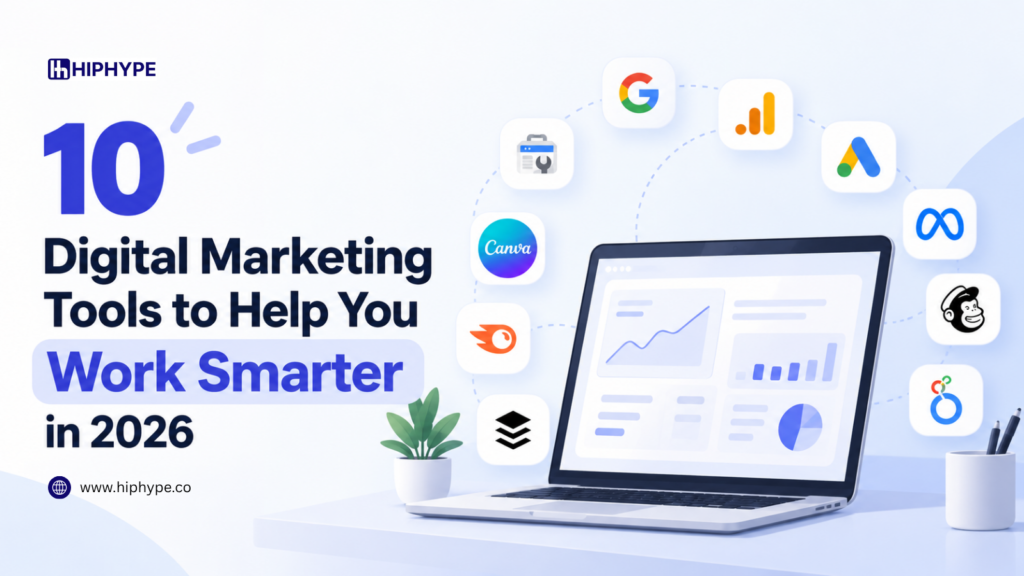
Digital marketing involves many tasks, from researching keywords and creating content to managing advertising campaigns and measuring results. Using the right tools can help businesses organize these activities, save time, and make better marketing decisions.
However, businesses do not need every tool available. The best approach is to choose tools based on specific goals, available resources, and marketing needs.
Here are 10 useful digital marketing tools to consider in 2026.
1. Google Analytics 4 (GA4)
Google Analytics 4 helps businesses understand how people interact with their websites and apps. It provides insights into traffic sources, user behaviour, engagement, and conversions.
Best for: Understanding website performance and customer activity.
2. Google Search Console
Google Search Console helps businesses monitor their website’s performance in Google Search. You can review search queries, clicks, impressions, indexing issues, and other search performance data.
Best for: SEO monitoring and organic search performance.
3. Google Keyword Planner
Google Keyword Planner helps marketers discover keyword ideas, review estimated search volumes, and explore advertising bid estimates. It is particularly useful when planning Google Search campaigns.
Best for: Keyword research and paid search planning.
4. Semrush
Semrush offers tools for SEO research, competitor analysis, keyword tracking, and content planning. Marketers can use it to identify opportunities and understand how competing websites approach search visibility.
Best for: SEO research and competitor analysis.
5. Canva
Canva makes it easier to create social media graphics, advertisements, presentations, and other marketing materials using templates and design features.
It can help businesses maintain consistent branding without creating every design from scratch.
Best for: Marketing graphics and creative content.
6. Google Ads
Google Ads allows businesses to create paid advertising campaigns across Google Search and other supported placements. Advertisers can target relevant audiences, manage budgets, and measure campaign performance.
Best for: Reaching people who are searching for relevant products or services.
7. Meta Ads Manager
Meta Ads Manager helps businesses create and manage advertising campaigns across supported Meta platforms, including Facebook and Instagram. It provides campaign controls and performance reporting.
Best for: Paid social campaigns and audience targeting.
8. Buffer
Buffer helps businesses plan, schedule, publish, and review social media content across supported platforms. It can simplify content scheduling and help teams maintain a consistent publishing routine.
Best for: Social media planning and publishing.
9. Mailchimp
Mailchimp provides email marketing tools for creating campaigns, managing subscriber lists, and setting up supported marketing automations. Businesses can use it to share updates, nurture subscribers, and communicate with customers.
Best for: Email campaigns and subscriber communication.
10. Looker Studio
Looker Studio helps marketers turn data into visual reports and dashboards. Businesses can use it to present performance information from supported data sources in a format that is easier to understand and share.
Best for: Marketing reports and performance dashboards.
How to Choose the Right Digital Marketing Tools
Before investing in multiple platforms, identify the tasks you need to improve. For example, a business focused on organic growth may prioritize Google Search Console and Semrush, while a business running paid campaigns may need Google Ads and Meta Ads Manager.
Also consider pricing, ease of use, integrations, reporting capabilities, and the time required to manage each tool. Some platforms offer free features, while others require paid plans for advanced functionality.
Start with a small set of tools, understand their value, and add more only when a clear need arises.
Conclusion
The right digital marketing tools can make everyday tasks more organized and help businesses understand their marketing performance. From keyword research and creative design to advertising and reporting, each tool serves a different purpose.
Instead of using all 10 tools at once, choose the ones that support your current goals. A focused toolkit can help your business work more efficiently and build a more organized digital marketing strategy.
FAQs
1. What are digital marketing tools?
Digital marketing tools are software platforms that help businesses manage activities such as SEO, advertising, content creation, social media, email marketing, and analytics.
2. Which digital marketing tools are best for beginners?
Google Search Console, Google Analytics 4, Canva, and Google Keyword Planner are useful starting points, depending on your goals and setup requirements.
3. Are digital marketing tools free?
Some tools offer free access or free features, while others use paid subscriptions. Pricing and feature limits vary by platform and plan.
4. Which tools are useful for SEO?
Google Search Console, Google Keyword Planner, and Semrush can support different SEO activities, including search performance monitoring, keyword research, and competitor analysis.
5. Which tools help manage social media marketing?
Buffer helps with social media scheduling and publishing, Canva supports creative design, and Meta Ads Manager is used to manage supported paid campaigns.
6. Do small businesses need all 10 digital marketing tools?
No. Small businesses should choose tools according to their marketing goals, budget, team size, and current requirements. A few well-used tools are often more practical than managing too many platforms.