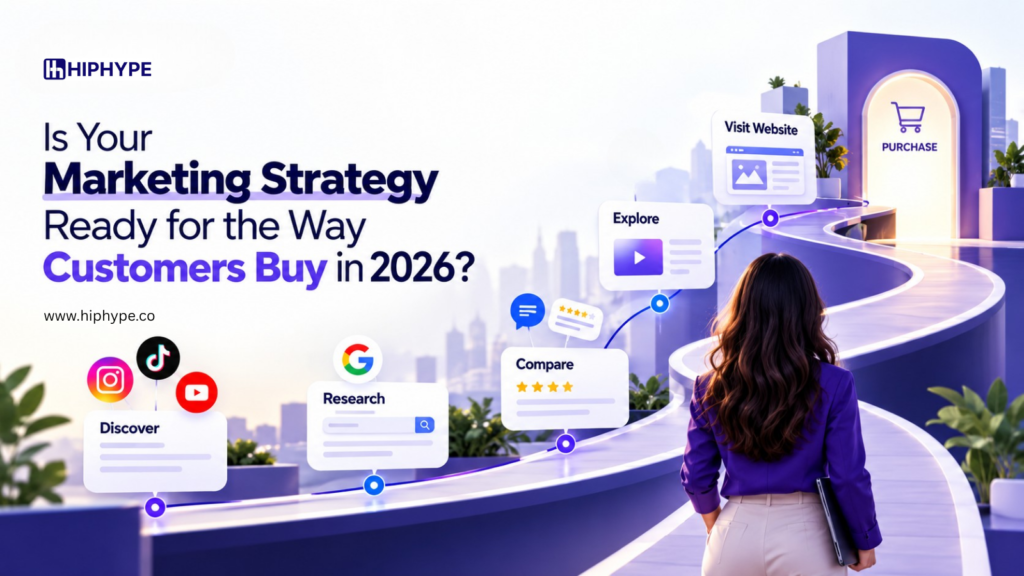
The way customers discover, research, and choose businesses has changed. People no longer follow a simple path from seeing an advertisement to making a purchase. They may discover a brand on social media, search for it on Google, watch a video, read reviews, visit the website, compare alternatives, and return days later before making a decision.
This means businesses need more than individual marketing campaigns. They need a strategy that connects different channels and supports customers throughout their buying journey.
How Are Customers Buying Differently in 2026?
Customers have more information and more choices than ever. They can research a business before speaking with a sales team and often interact with a brand through several platforms before converting.
A strong digital marketing strategy should therefore focus not only on getting attention but also on being useful and consistent throughout the customer journey.
1. Discovery Happens Across Multiple Channels
Customers can discover businesses through search engines, social media, videos, online reviews, AI-powered search experiences, and other digital platforms.
Your business does not necessarily need to be everywhere. Instead, identify where your target customers spend time and make sure your brand has a useful presence on those channels.
2. Customers Research Before They Contact You
A potential customer may visit your website, check your reviews, compare your services, look at your social media content, and search for additional information before contacting your business.
Your digital presence should answer the questions customers are likely to have. Clear service information, helpful content, strong landing pages, reviews, and easy contact options can make the research process easier.
3. Every Marketing Channel Has a Different Role
SEO, paid advertising, social media, content marketing, email, and automation should not operate as completely separate activities.
For example, SEO can help customers discover your business, paid advertising can capture high-intent searches, social media can build awareness, content can support research, and automation can help manage follow-ups.
The goal is to create a connected marketing system rather than simply running multiple channels.
4. Customers Expect More Relevant Experiences
People are more likely to engage with content that matches their interests, needs, and stage in the buying process.
Instead of showing the same message to everyone, businesses can create different content and campaigns for different customer segments. This can make marketing communication more relevant without making the strategy unnecessarily complicated.
5. Your Brand Should Stay Consistent
Customers may encounter your business on several platforms before becoming a customer. If your messaging, offers, branding, or information changes significantly from one channel to another, it can create confusion.
Your website, social media, advertising, content, and other marketing channels should communicate a consistent brand message while adapting the format to each platform.
6. Measurement Should Follow the Customer Journey
Looking at one metric or one marketing channel does not always show the complete picture.
Businesses should understand how different activities contribute to the customer journey. Instead of focusing only on clicks, impressions, or website visits, track meaningful actions such as enquiries, bookings, qualified leads, conversions, and customer acquisition.
How Can Businesses Prepare Their Marketing Strategy for 2026?
Start by reviewing the complete customer journey. Identify where customers discover your business, what information they need before making a decision, which channels influence them, and where potential customers drop off.
Then connect your SEO, content, advertising, social media, analytics, and automation efforts around those customer needs.
Conclusion
Customer behaviour is becoming more connected across digital channels. A successful marketing strategy in 2026 should not focus on one platform alone. It should create a consistent journey from discovery to research, consideration, and conversion.
Businesses that understand how their customers move between channels can build marketing strategies that are more relevant, measurable, and connected.
FAQs
1. What is a modern digital marketing strategy?
A modern digital marketing strategy connects channels such as SEO, paid advertising, social media, content marketing, analytics, and automation around specific business and customer goals.
2. Why is the customer journey important in digital marketing?
Understanding the customer journey helps businesses identify how people discover, research, compare, and eventually choose a product or service.
3. Should businesses be present on every digital platform?
No. Businesses should prioritize platforms that are relevant to their target audience and business objectives rather than trying to maintain a presence everywhere.
4. How can businesses make their marketing more relevant?
Businesses can use customer segments, search intent, behavioural data, and different content formats to create messages that better match customer needs.
5. What should businesses measure in digital marketing?
Important metrics can include qualified leads, conversions, customer acquisition cost, engagement, website actions, and revenue, depending on the business model.
6. How can HipHype help with digital marketing?
HipHype can help businesses build and manage digital marketing strategies across SEO, GEO, AEO, Google Ads, Meta Ads, social media marketing, content marketing, marketing automation, and GoHighLevel solutions.