Many businesses attract visitors to their websites but struggle to turn those visitors into leads or customers. Some people explore a service, others add products to their carts, and many leave without taking the next step.
This is where conversion funnel optimization becomes useful. It helps businesses understand how people move through the buying journey, identify where they leave, and improve the experience to encourage more meaningful actions.
Instead of focusing only on attracting more traffic, businesses can work on helping existing visitors move closer to their goals.
What Is Conversion Funnel Optimization?
Conversion funnel optimization is the process of improving the steps visitors take before completing a desired action, such as making a purchase, submitting a contact form, booking a consultation, or signing up for a service.
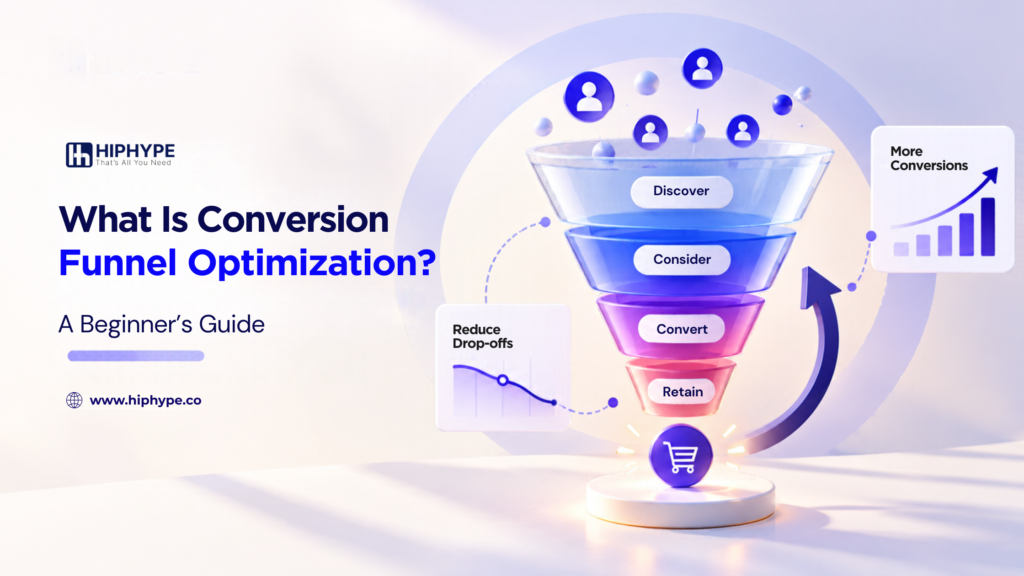
A conversion funnel represents the journey from a visitor’s first interaction with a business to the final action. At each stage, some people continue while others leave.
The goal is to identify unnecessary barriers, provide useful information, and make the next step clear.
For example, an online store may receive many product page visits but very few purchases. By reviewing product information, delivery costs, and the checkout process, the business can identify areas that may be preventing customers from completing their orders.
Why Is Conversion Funnel Optimization Important?
A well-structured conversion funnel helps businesses understand customer behaviour and make better decisions about their website and marketing activities.
Here are some important benefits:
- Identify customer drop-offs: Understand where visitors leave before completing an action.
- Improve user experience: Make it easier for people to find information and navigate the website.
- Generate more qualified leads: Help interested visitors take the next step towards becoming customers.
- Use existing traffic more effectively: Improve the experience for people already visiting your website.
- Make informed decisions: Use analytics and customer feedback to prioritize improvements.
These benefits depend on identifying the actual problems and measuring the results of changes rather than assuming that every improvement will increase conversions.
What Are the Main Stages of a Conversion Funnel?
A conversion funnel commonly includes four stages. The exact stages may vary depending on the business model and the action being measured.
1. Awareness
At this stage, people discover your business through search engines, social media, advertisements, referrals, or other channels.
Your goal is to help relevant visitors understand what your business offers and why it may be useful to them.
You can support this stage by creating helpful content, using clear landing page messaging, and making sure your advertising matches the page visitors reach.
2. Interest and Consideration
Visitors who are interested in your offer may explore service pages, compare products, read reviews, or look for additional information.
At this stage, they need clear answers to their questions.
You can improve their experience by providing useful product descriptions, explaining service benefits, displaying transparent pricing where appropriate, and answering common customer concerns.
3. Conversion
At this stage, visitors are ready to complete a desired action. This might be purchasing a product, requesting a quote, booking a meeting, or submitting an enquiry.
Make the process straightforward by using clear call-to-action buttons, simple forms, convenient payment options, and transparent information about what happens next.
Remove unnecessary steps that make completing the action more difficult.
4. Retention and Repeat Actions
For many businesses, the customer journey continues after the first conversion. Customers may return to make another purchase, renew a service, or recommend the business to others.
Useful follow-up emails, reliable customer support, relevant offers, and a positive post-purchase experience can encourage customers to stay engaged.
Retention is particularly important for businesses that depend on repeat purchases or long-term customer relationships.
How to Optimize Your Conversion Funnel
Understanding the stages is only the beginning. You also need a practical process for identifying problems and improving performance.
1. Define Your Conversion Goal
Start by deciding what a successful conversion means for your business.
For an e-commerce website, it may be a completed purchase. For a service business, it could be a qualified enquiry or a booked consultation.
Choose a clear goal and make sure your analytics setup measures it correctly. Without a defined goal, it becomes difficult to evaluate whether your funnel improvements are working.
2. Analyze Visitor Behaviour
Use analytics tools to understand how visitors move through your website.
Google Analytics 4 can help you examine events and user journeys when tracking is configured correctly. Depending on your setup, you may be able to review product views, form interactions, checkout starts, and completed conversions.
Look for stages where a large proportion of visitors stop progressing. A drop-off does not automatically mean something is wrong, so consider the page purpose, traffic source, and expected customer behaviour before deciding what to change.
3. Improve the Pages Where Visitors Drop Off
Once you identify a potential problem, review the relevant page carefully.
For example, if visitors leave a service page without submitting an enquiry, check whether the service benefits are clear, the contact option is easy to find, and the form asks for necessary information only.
If shoppers leave during checkout, investigate unexpected costs, confusing steps, payment issues, or technical errors.
Focus on the specific barrier instead of making unrelated changes across the website.
4. Make Your Calls to Action Clear
Visitors should understand what they can do next. Vague labels may not explain the purpose of a button or what will happen after clicking it.
Use action-oriented wording that matches the page and the visitor’s needs. Examples include “Request a Quote,” “Book a Consultation,” and “Complete Your Purchase.”
Make sure each button leads to the expected destination and works correctly on desktop and mobile devices.
5. Reduce Unnecessary Friction
Friction refers to anything that makes it harder for visitors to complete an action.
Common examples include slow-loading pages, confusing navigation, lengthy forms, unclear pricing, and unexpected checkout requirements.
Review the complete journey from the visitor’s perspective. Fix technical problems, simplify unnecessary steps, and make important information easy to find.
6. Test Changes and Measure Results
Do not assume that every change will improve performance. Test important changes when possible and compare the results with your original performance.
For example, you could test a shorter enquiry form or a clearer call-to-action button. Define your hypothesis and success metric before the test begins.
Give the test enough time and data to produce a meaningful comparison. Where testing is not practical, monitor results carefully and consider other factors that may have influenced performance.
Which Metrics Should You Track?
The right metrics depend on your conversion goal and business model. Useful measurements may include:
- Conversion rate: The percentage of visitors or sessions that complete the defined conversion.
- Drop-off rate: The proportion of people who leave a measured stage without progressing.
- Add-to-cart rate: The proportion of relevant visitors or sessions that add products to their carts.
- Checkout completion rate: The proportion of shoppers who complete checkout after starting it.
- Lead form completion rate: The proportion of visitors who successfully submit an enquiry form.
- Customer acquisition cost: The cost of acquiring a customer, when reliable cost and conversion data are available.
Use consistent definitions when comparing these metrics. For example, a conversion rate based on sessions may differ from one based on users.
Choose a small set of metrics that directly relate to your business goal instead of tracking every available number.
Common Conversion Funnel Optimization Mistakes
Even well-planned optimization efforts can become less effective when businesses focus on the wrong priorities.
Avoid these common mistakes:
- Making assumptions without data: Investigate visitor behaviour before deciding what needs to change.
- Focusing only on button clicks: More clicks do not necessarily mean more purchases or qualified leads.
- Ignoring mobile visitors: Test the complete journey on smaller screens.
- Changing too many elements at once: It becomes harder to understand which change influenced the result.
- Overlooking technical problems: Broken forms, payment errors, and incorrect tracking can affect both conversions and reporting.
A focused, evidence-based approach makes it easier to identify useful improvements and evaluate their impact.
Conclusion
Conversion funnel optimization helps businesses understand how visitors move from their first interaction to a completed action. By identifying drop-offs, improving important pages, simplifying the user journey, and measuring results, businesses can make their websites more effective.
Start with one clear conversion goal, review your existing data, and identify the stage that needs the most attention. Make practical changes, measure their impact, and continue improving based on what you learn.
The aim is not simply to get more visitors to click. It is to help the right visitors take the next step with less confusion and unnecessary effort.
Frequently Asked Questions
1. What Is Conversion Funnel Optimization?
Conversion funnel optimization is the process of improving the steps visitors take before completing an action, such as making a purchase, submitting an enquiry, or booking a consultation.
2. What Is the Difference Between Conversion Funnel Optimization and CRO?
Conversion rate optimization (CRO) is the broader practice of improving the percentage of visitors who complete a desired action. Conversion funnel optimization focuses specifically on improving the stages people move through before completing that action.
3. How Do I Identify Where Visitors Leave My Conversion Funnel?
Use analytics tools to examine visitor progression through important events and pages. Look for significant drop-offs, then investigate the page experience, traffic source, customer needs, and potential technical issues.
4. Which Tools Can Help With Conversion Funnel Optimization?
Google Analytics 4 can help track visitor behaviour and conversions when configured correctly. Depending on your needs, you can also use heatmap tools, session recordings, customer feedback, and A/B testing tools to investigate potential problems.
5. How Often Should I Review My Conversion Funnel?
Review your funnel regularly and whenever you make significant changes to your website, products, or marketing campaigns. The ideal frequency depends on your traffic volume, business goals, and how quickly your data changes.
6. Can Conversion Funnel Optimization Help Small Businesses?
Yes. Small businesses can start by reviewing their most important pages, simplifying enquiry forms, clarifying service information, and tracking completed leads or purchases. Even a few focused improvements can provide useful insights into customer behaviour.