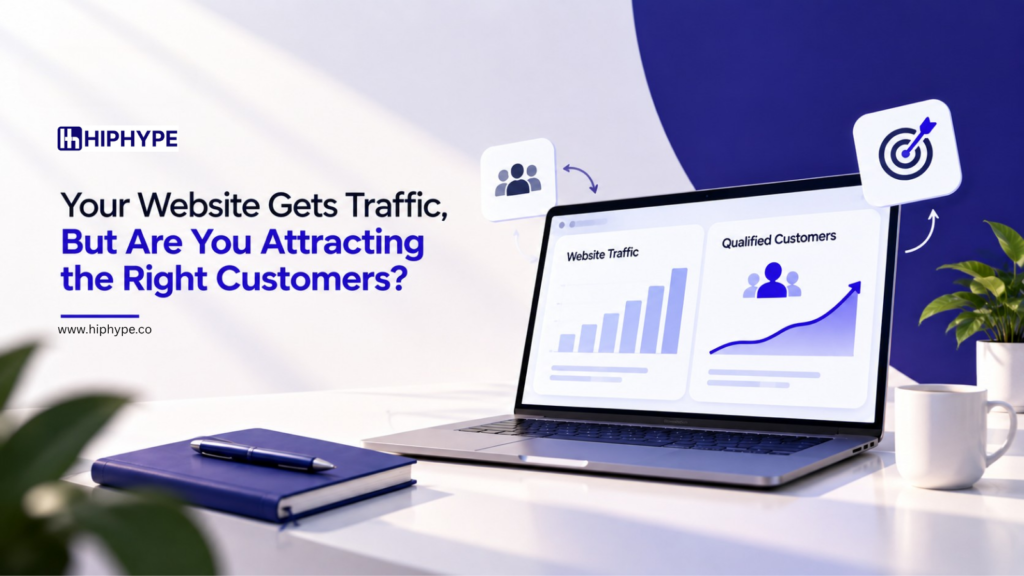
Getting more website traffic is often treated as a major digital marketing goal. Businesses track organic sessions, page views, rankings, and clicks to understand how their website is performing. But high traffic does not always mean high-quality leads or more customers.
A website can attract thousands of visitors and still generate very few enquiries or sales. The reason is often simple: the traffic is not coming from the right audience or the right search intent.
For businesses, the goal should not be to get more traffic at any cost. It should be to attract qualified website traffic—visitors who are genuinely interested in the products or services being offered.
What Is Qualified Website Traffic?
Qualified website traffic refers to visitors who are more likely to be interested in what your business offers and take a meaningful action.
For example, a digital marketing agency may receive traffic from people searching for “what is SEO.” That visitor may simply be looking for information.
Another visitor may search for “SEO agency for small business”. This search shows a stronger commercial intent because the person may be actively looking for a service provider.
Both searches can generate website traffic, but they do not represent the same business opportunity.
This is why understanding search intent is essential.
Why High Website Traffic Does Not Always Generate Leads
1. You May Be Targeting the Wrong Keywords
A common SEO mistake is focusing heavily on search volume without considering whether the keyword is relevant to the business.
A keyword may have thousands of monthly searches but attract people who are not interested in buying your product or service.
Instead of focusing only on high-volume keywords, businesses should consider:
- What is the user searching for?
- What problem are they trying to solve?
- Are they looking for information or a solution?
- Are they ready to contact a business?
- Does the keyword match your product or service?
This helps create a more effective SEO and content marketing strategy.
2. Your Content May Not Match Search Intent
Search intent describes the reason behind a search.
Someone searching for “how does Google Ads work?” has a different intent from someone searching for “Google Ads agency for ecommerce.”
The first search is primarily informational. The second has a stronger commercial intent.
If your content does not match what users expect to find, they may leave your website quickly without exploring your services.
Creating content based on different stages of the customer journey can help businesses attract and guide more relevant visitors.
3. High Traffic Pages May Have No Clear Next Step
Even relevant visitors may leave if they do not know what to do next.
A page should make the next step clear and relevant to the user’s intent. Depending on the page, this could include:
- Requesting a consultation
- Exploring a service
- Downloading a resource
- Contacting the business
- Requesting a quote
- Viewing related content
The CTA should feel like a natural continuation of the user’s journey rather than an unrelated sales message.
4. Your Landing Page May Not Match the Search
A visitor who searches for a specific service should ideally land on a page that clearly addresses that service.
For example, if someone searches for “Google Ads management services,” sending them to a generic homepage may create unnecessary friction.
A relevant landing page should explain the service, address the customer’s needs, provide useful information, and make the next step easy.
This connection between search intent, content, landing pages, and conversion is an important part of conversion rate optimization.
How to Attract More Qualified Traffic
Start by reviewing the keywords and pages already bringing visitors to your website.
Look beyond traffic volume and examine:
- Which keywords generate relevant visitors?
- Which pages attract potential customers?
- Which pages generate leads?
- Which search queries have commercial intent?
- Where are users leaving the website?
- Which content contributes to conversions?
Google Search Console and Google Analytics can help businesses connect search performance with website engagement and conversions.
The objective is not simply to increase the number of visitors. It is to improve the quality and relevance of the traffic coming to the website.
Measure Business Results, Not Traffic Alone
Traffic is useful, but it should not be the only success metric.
A stronger digital marketing measurement strategy can include:
- Qualified leads
- Conversion rate
- Organic conversions
- Enquiries
- Sales
- Cost per lead
- Revenue
- Assisted conversions
This provides a clearer picture of whether SEO and content marketing are contributing to actual business growth.
Conclusion
More website traffic does not automatically mean more customers. What matters is whether the people reaching your website are interested in what your business provides and whether your website gives them a clear path forward.
By focusing on search intent, relevant keywords, useful content, targeted landing pages, and conversion optimization, businesses can move from simply generating traffic to attracting visitors who are more likely to become customers.
The goal of SEO should not be more traffic alone. It should be more relevant traffic that creates meaningful business opportunities.
FAQs
1. What is qualified website traffic?
Qualified website traffic refers to visitors who are relevant to a business and are more likely to engage, enquire, purchase, or take another valuable action.
2. Why is my website getting traffic but no leads?
Common reasons include irrelevant keywords, incorrect search intent, weak landing pages, unclear CTAs, poor user experience, or attracting visitors who are not part of your target audience.
3. How can I attract more qualified traffic?
Focus on relevant keywords, understand search intent, create useful content for your target audience, optimize service and landing pages, and connect your content with clear conversion paths.
4. What is search intent?
Search intent is the reason behind a user’s search. Common types include informational, navigational, commercial, and transactional intent.
5. Should I focus on high-volume keywords?
Not always. A lower-volume keyword with strong commercial intent can be more valuable to a business than a high-volume keyword that attracts an unrelated audience.
6. How do I measure the quality of website traffic?
Look beyond sessions and page views. Track qualified leads, conversions, enquiries, sales, conversion rates, and the search queries and landing pages associated with those outcomes.